




— How did the idea for your startup come about?
— By education, I am neither a doctor nor a teacher, and I also have no IT experience. But I am a deeply religious person and not indifferent to the problems of childhood illnesses. I believe such a serious issue cannot be ignored. You don’t have to suffer a heart attack to become a cardiologist, do you?
I understand that parents of special-needs children don’t have time to create startups. Every day is a major challenge for them. They live with a lack of understanding of what is happening, because science has not fully studied such conditions. I worked in a team with psychologists and neurologists and often communicate with parents of children with developmental disabilities. This pushed me to open a specialized center for such children. There, I gained strong practical experience and a lot of knowledge on this topic. I believe that with any disorder, it is possible to stabilize the condition. But this cannot be achieved only by attending developmental centers and specialized schools: specialists can only guide, and the rest is in the parents’ hands. They are the ones who must help their children integrate into society. That is how the idea of the MentiAI startup was born—to support parents of special-needs children. In 2025, we were included in the list of the top 15 startups according to Astana Hub.
— Tell us more about your background.
— By education, I am a legal expert, a graduate of the Academy of the Ministry of Internal Affairs of Kazakhstan. I worked for some time in law enforcement. But since my mother worked as a teacher all her life and my father was a doctor, information about children and various illnesses surrounded me. Their empathy rubbed off on me.
I have worked as the chairman of a joint-stock company, served on boards of directors of large companies, and also held entry-level positions. During crises, I even worked as a taxi driver.
— What societal pain points were you able to identify?
— Children spend at most four hours in developmental centers. Then they come home and have no opportunity to apply the knowledge they gained. The problem is that many parents lack understanding of how to properly interact with such a child, which results in them speaking different “languages.” Communication difficulties may trigger tantrums in the child, while the parent may respond with aggression. A conflict arises, distance grows, and the newly acquired knowledge is never applied in practice. The task of the MentiAI platform is to teach parents inclusive literacy and provide them with tools that will be useful every day. Parents will better understand their child, and the family’s stress level will decrease. In the U.S., for example, parents celebrate every small progress and action of their children, organize celebrations in their honor, and children, in turn, feel greater support. This is a simple thing that greatly strengthens family bonds.
— Tell us about the functionality of MentiAI.
— At the moment, we only have a web version. We plan to develop a mobile application after attracting our first investments or grants. The website is currently available in Russian, and a Kazakh translation is under development. In the future, the team and I plan to adapt MentiAI for English- and Arabic-speaking audiences as well. It is important to note that we do not require users to provide real names, as the topic is sensitive and painful. The website offers the following features:
-
An AI consultant operates 24/7, filtering user requests and answering questions.
-
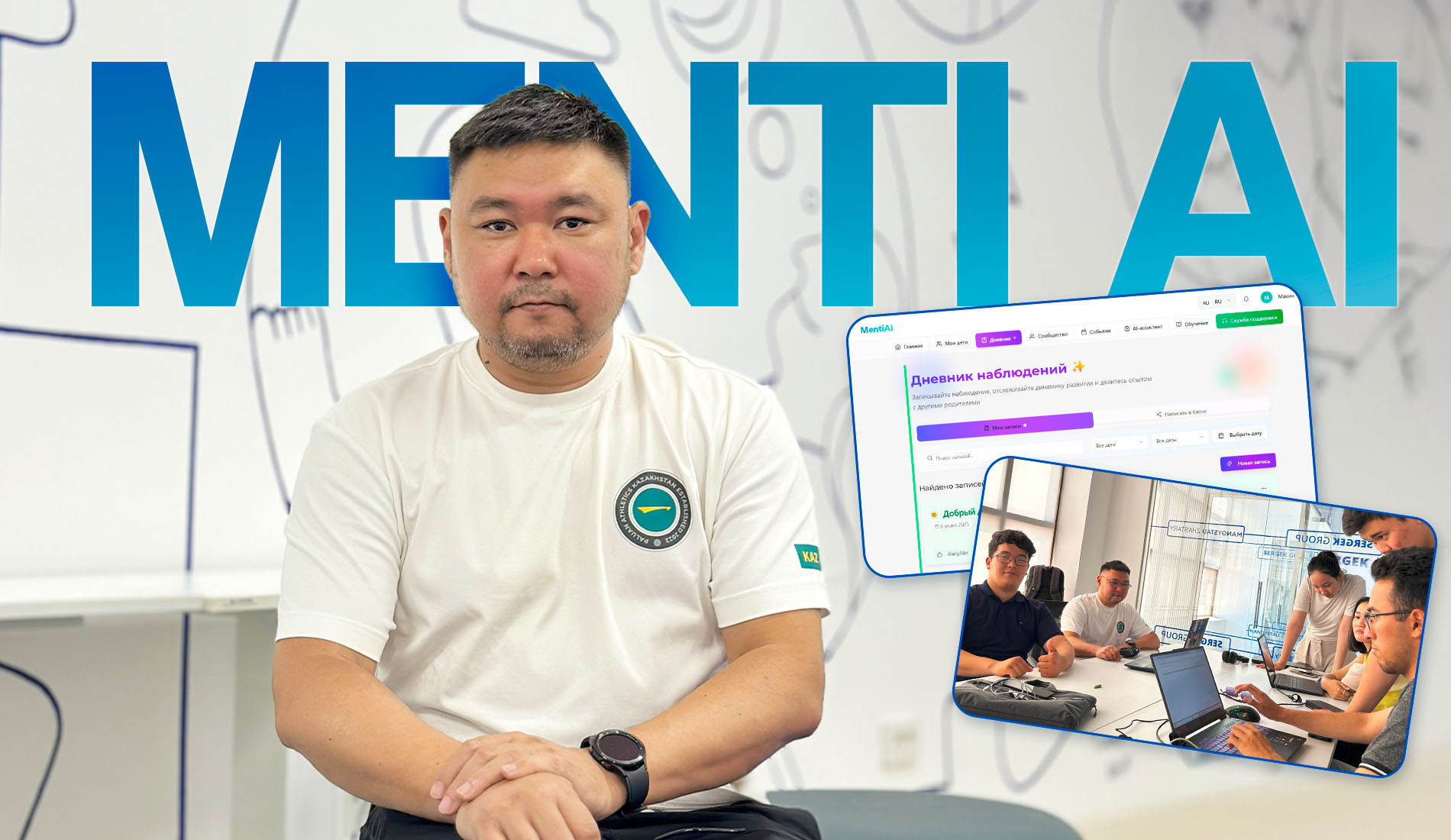
Parents fill out a questionnaire about their child: diagnosis, age, level of independence, and speech development. Based on this data, AI selects activities for parents, which are displayed on the main page.
-
There is a thematic platform where parents of special-needs children can communicate, share experiences, give recommendations, suggest doctors, and support one another.
-
In the “Diary,” parents can record daily events, the child’s developmental progress, and their own emotions. Everything is confidential, but parents can make entries public if they wish and share them with others. For example, parents of children with ADHD can discuss common problems and solutions. More experienced parents can help those who are just facing a diagnosis. These are not professional recommendations, but advice from real people who achieved results through effort, tears, sweat, and sleepless nights.
-
In “Blogs,” parents can create thematic groups and share article links.
-
In “Communities,” parents can find others whose children have the same diagnosis.
-
“Chats” allow private messaging between two users, with full confidentiality.
-
In “Events,” users can schedule offline meetings, invite each other to celebrations, or plan outings. Some mothers have learned new professions for the sake of their children and can teach others, such as massage. Such meetings can be free or paid. Even 500 or 1,000 tenge can provide additional income.
In the future, I plan to add activity-based rewards and organize thematic meetings for parents, such as self-massage or makeup sessions. I want women to step out of this exhausting routine, pay attention to themselves, smile a little, and remember that they are women first, and only then mothers. A parent’s state undoubtedly affects the child’s state.
— For parents of children of what age is the startup intended?
— There are no age restrictions.
— Can you list the specialists working in the startup?
— I do most of the work myself, but Aydana, the project’s CMO, also contributes. She went through the journey with her son from developmental delay to becoming a neurotypical child who is now entering a regular school. This result was achieved through constant, regular sessions. Now, in addition to marketing, Aydana communicates with other mothers on the platform. When I invited her to join MentiAI, she supported the idea so that more mothers could achieve positive outcomes.
We regularly involve specialists in defectology and psychology who work with platform users on a daily basis.
— How were you technically able to create such a website without programming experience?
— I built the website myself using software. I had no programming experience at all and don’t know any languages. With the help of Astana Hub, I was able to create a functional website in two weeks. The MVP was created thanks to Astana Hub as well: during Startup Garage and Startup Academy trainings, I learned how to turn ideas into a real product. I was taught how to work with AI and marketing.
— Does your startup generate income?
— So far, it brings only emotional satisfaction, because it is a social project. This is a social pain point and a serious problem. Parents cannot pay for the platform, since supporting just one child costs at least 400,000 tenge per month, including doctors, massages, and so on. By the way, many specialists also refuse to work with us because we cannot yet offer strong financial terms.
That’s why I am turning to the public sector, so that with the help of the state we can provide inclusive tools and education. We have identified four focus areas, so we will send letters to the Ministry of Healthcare, the Ministry of Education, the Ministry of Digital Development, and the Ministry of Labor and Social Protection.
— What else is in your plans?
— After starting cooperation with the state, I envision integration with eGov Mobile so parents can apply for disability status for their child online. Within a year, we want to integrate everything related to special-needs children and family support through our platform—digitizing everything from diagnosis to rehabilitation programs.
— How do you finance the startup? Do you have other projects?
— I don’t have other projects. Overall, maintaining and developing the startup costs me about 50,000 tenge per month.
— How much investment would you like to raise?
— $200,000. First, to improve the technological and technical aspects of the project. Second, to hire a technical team. I want to expand the platform’s functionality, and I need strong specialists to properly develop the methodology. Then we will submit it to the Ministry of Education. And of course, we need funds for promotion and scaling.
— Where do you plan to scale?
— As a patriot of my country, my priority is to develop MentiAI throughout Kazakhstan. Then Azerbaijan, Turkmenistan, and Uzbekistan. After that—the UAE, Qatar, Saudi Arabia, Egypt, and Yemen. And eventually, I would like to scale to the U.S.
— You mentioned that some people do not accept their children’s diagnoses. Do you think only conscious and engaged parents will use the startup, while indifferent ones will not be interested?
— This problem is temporary, because the startup is still relatively young. Right now, we give active parents an opportunity to participate in social progress. They recommend it to others. When the methodology proves its effectiveness, any parent will want to join.
— Do you have integration with clinics, developmental centers, or schools?
— Such integration is planned. I want to start it after receiving a response from the Presidential Administration.
— How did the idea for your startup come about?
— By education, I am neither a doctor nor a teacher, and I also have no IT experience. But I am a deeply religious person and not indifferent to the problems of childhood illnesses. I believe such a serious issue cannot be ignored. You don’t have to suffer a heart attack to become a cardiologist, do you?
I understand that parents of special-needs children don’t have time to create startups. Every day is a major challenge for them. They live with a lack of understanding of what is happening, because science has not fully studied such conditions. I worked in a team with psychologists and neurologists and often communicate with parents of children with developmental disabilities. This pushed me to open a specialized center for such children. There, I gained strong practical experience and a lot of knowledge on this topic. I believe that with any disorder, it is possible to stabilize the condition. But this cannot be achieved only by attending developmental centers and specialized schools: specialists can only guide, and the rest is in the parents’ hands. They are the ones who must help their children integrate into society. That is how the idea of the MentiAI startup was born—to support parents of special-needs children. In 2025, we were included in the list of the top 15 startups according to Astana Hub.
— Tell us more about your background.
— By education, I am a legal expert, a graduate of the Academy of the Ministry of Internal Affairs of Kazakhstan. I worked for some time in law enforcement. But since my mother worked as a teacher all her life and my father was a doctor, information about children and various illnesses surrounded me. Their empathy rubbed off on me.
I have worked as the chairman of a joint-stock company, served on boards of directors of large companies, and also held entry-level positions. During crises, I even worked as a taxi driver.
— What societal pain points were you able to identify?
— Children spend at most four hours in developmental centers. Then they come home and have no opportunity to apply the knowledge they gained. The problem is that many parents lack understanding of how to properly interact with such a child, which results in them speaking different “languages.” Communication difficulties may trigger tantrums in the child, while the parent may respond with aggression. A conflict arises, distance grows, and the newly acquired knowledge is never applied in practice. The task of the MentiAI platform is to teach parents inclusive literacy and provide them with tools that will be useful every day. Parents will better understand their child, and the family’s stress level will decrease. In the U.S., for example, parents celebrate every small progress and action of their children, organize celebrations in their honor, and children, in turn, feel greater support. This is a simple thing that greatly strengthens family bonds.
— Tell us about the functionality of MentiAI.
— At the moment, we only have a web version. We plan to develop a mobile application after attracting our first investments or grants. The website is currently available in Russian, and a Kazakh translation is under development. In the future, the team and I plan to adapt MentiAI for English- and Arabic-speaking audiences as well. It is important to note that we do not require users to provide real names, as the topic is sensitive and painful. The website offers the following features:
-
An AI consultant operates 24/7, filtering user requests and answering questions.
-
Parents fill out a questionnaire about their child: diagnosis, age, level of independence, and speech development. Based on this data, AI selects activities for parents, which are displayed on the main page.
-
There is a thematic platform where parents of special-needs children can communicate, share experiences, give recommendations, suggest doctors, and support one another.
-
In the “Diary,” parents can record daily events, the child’s developmental progress, and their own emotions. Everything is confidential, but parents can make entries public if they wish and share them with others. For example, parents of children with ADHD can discuss common problems and solutions. More experienced parents can help those who are just facing a diagnosis. These are not professional recommendations, but advice from real people who achieved results through effort, tears, sweat, and sleepless nights.
-
In “Blogs,” parents can create thematic groups and share article links.
-
In “Communities,” parents can find others whose children have the same diagnosis.
-
“Chats” allow private messaging between two users, with full confidentiality.
-
In “Events,” users can schedule offline meetings, invite each other to celebrations, or plan outings. Some mothers have learned new professions for the sake of their children and can teach others, such as massage. Such meetings can be free or paid. Even 500 or 1,000 tenge can provide additional income.
In the future, I plan to add activity-based rewards and organize thematic meetings for parents, such as self-massage or makeup sessions. I want women to step out of this exhausting routine, pay attention to themselves, smile a little, and remember that they are women first, and only then mothers. A parent’s state undoubtedly affects the child’s state.
— For parents of children of what age is the startup intended?
— There are no age restrictions.
— Can you list the specialists working in the startup?
— I do most of the work myself, but Aydana, the project’s CMO, also contributes. She went through the journey with her son from developmental delay to becoming a neurotypical child who is now entering a regular school. This result was achieved through constant, regular sessions. Now, in addition to marketing, Aydana communicates with other mothers on the platform. When I invited her to join MentiAI, she supported the idea so that more mothers could achieve positive outcomes.
We regularly involve specialists in defectology and psychology who work with platform users on a daily basis.
— How were you technically able to create such a website without programming experience?
— I built the website myself using software. I had no programming experience at all and don’t know any languages. With the help of Astana Hub, I was able to create a functional website in two weeks. The MVP was created thanks to Astana Hub as well: during Startup Garage and Startup Academy trainings, I learned how to turn ideas into a real product. I was taught how to work with AI and marketing.
— Does your startup generate income?
— So far, it brings only emotional satisfaction, because it is a social project. This is a social pain point and a serious problem. Parents cannot pay for the platform, since supporting just one child costs at least 400,000 tenge per month, including doctors, massages, and so on. By the way, many specialists also refuse to work with us because we cannot yet offer strong financial terms.
That’s why I am turning to the public sector, so that with the help of the state we can provide inclusive tools and education. We have identified four focus areas, so we will send letters to the Ministry of Healthcare, the Ministry of Education, the Ministry of Digital Development, and the Ministry of Labor and Social Protection.
— What else is in your plans?
— After starting cooperation with the state, I envision integration with eGov Mobile so parents can apply for disability status for their child online. Within a year, we want to integrate everything related to special-needs children and family support through our platform—digitizing everything from diagnosis to rehabilitation programs.
— How do you finance the startup? Do you have other projects?
— I don’t have other projects. Overall, maintaining and developing the startup costs me about 50,000 tenge per month.
— How much investment would you like to raise?
— $200,000. First, to improve the technological and technical aspects of the project. Second, to hire a technical team. I want to expand the platform’s functionality, and I need strong specialists to properly develop the methodology. Then we will submit it to the Ministry of Education. And of course, we need funds for promotion and scaling.
— Where do you plan to scale?
— As a patriot of my country, my priority is to develop MentiAI throughout Kazakhstan. Then Azerbaijan, Turkmenistan, and Uzbekistan. After that—the UAE, Qatar, Saudi Arabia, Egypt, and Yemen. And eventually, I would like to scale to the U.S.
— You mentioned that some people do not accept their children’s diagnoses. Do you think only conscious and engaged parents will use the startup, while indifferent ones will not be interested?
— This problem is temporary, because the startup is still relatively young. Right now, we give active parents an opportunity to participate in social progress. They recommend it to others. When the methodology proves its effectiveness, any parent will want to join.
— Do you have integration with clinics, developmental centers, or schools?
— Such integration is planned. I want to start it after receiving a response from the Presidential Administration.

 Share
Share