
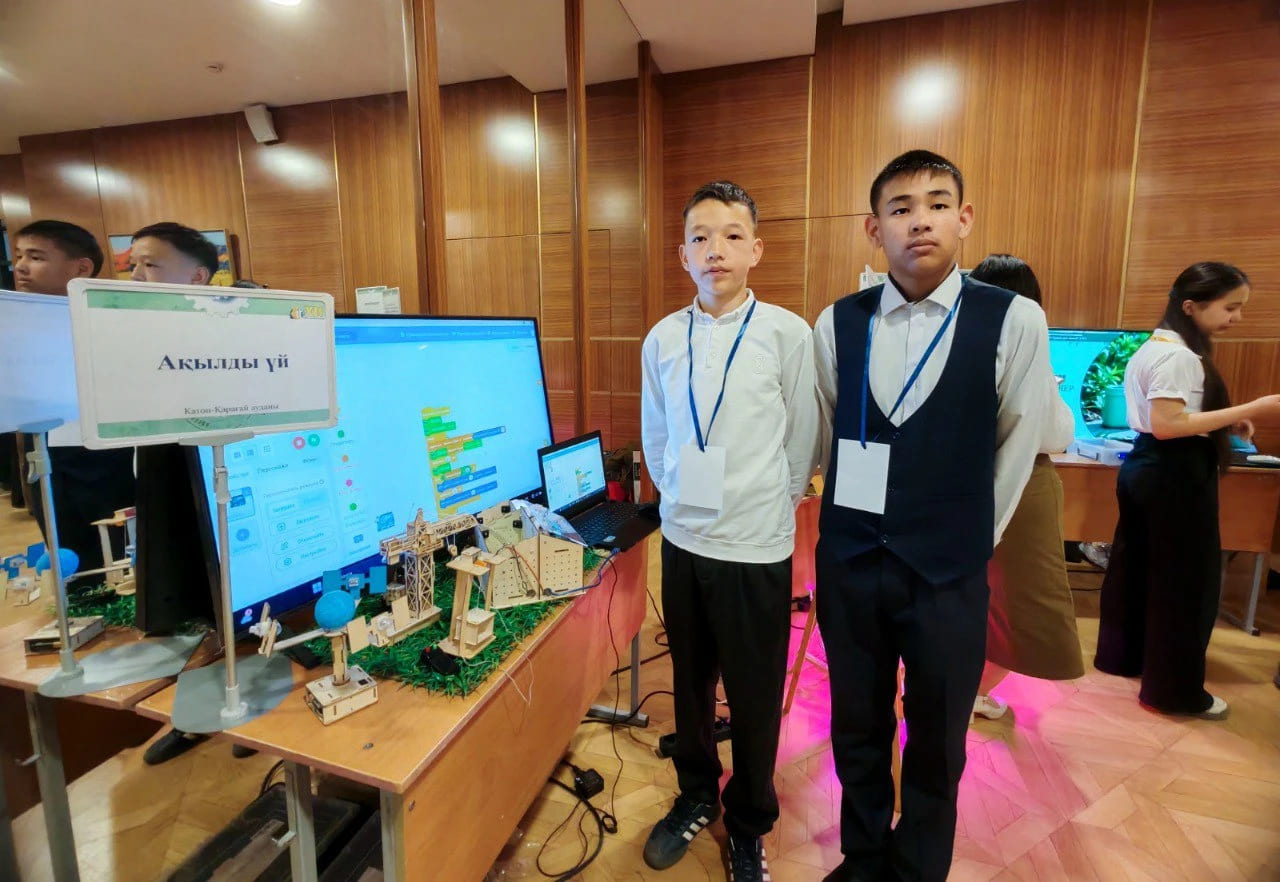





According to the Department of Education, since the beginning of 2025 courses have been launched in seven schools across the region, already involving 319 tenth-grade students.
The project is being implemented under an instruction of the President of the Republic of Kazakhstan and is based on the online educational platform edu.astanahub.com, developed with the participation of the international technology park Astana Hub. The platform is designed to foster digital competencies among school students nationwide. At the same time, training was launched for 300 teachers in the fields of “Artificial Intelligence” and “Game Development,” which has become a key element in ensuring the sustainable rollout of the courses in schools.
In East Kazakhstan, seven educational institutions are participating in the project. Their teachers successfully completed online training and began teaching the courses in January. Of the total number of students, 143 are studying artificial intelligence, while 176 are learning the fundamentals of computer game development.
Importantly, the courses have been officially incorporated into the schools’ working curricula. New subjects—“Introduction to Artificial Intelligence and Big Data” and “Fundamentals of Game Development”—have been added, with additional hours allocated within the elective component of the curriculum. This reflects a systemic approach rather than a short-term initiative.
A distinctive feature of the new subjects is their interdisciplinary nature. The curriculum includes fundamentals of programming, digital design, animation, user psychology, project management, and entrepreneurship. This comprehensive learning model enables students not only to study technologies, but also to develop critical and creative thinking, as well as teamwork skills—key competencies required of future professionals.
The project represents one of the first large-scale examples of how digital transformation is being practically integrated into Kazakhstan’s secondary education system. If the pilot proves successful, the approach will be scaled to other regions of the country, opening up opportunities to prepare a new generation of specialists from an early age.
In East Kazakhstan, this initiative may also serve as a foundation for building a regional digital education ecosystem, particularly in light of growing youth interest in the IT sector and the broader objectives of economic digitalization.
Read more at Altainews.kz.
According to the Department of Education, since the beginning of 2025 courses have been launched in seven schools across the region, already involving 319 tenth-grade students.
The project is being implemented under an instruction of the President of the Republic of Kazakhstan and is based on the online educational platform edu.astanahub.com, developed with the participation of the international technology park Astana Hub. The platform is designed to foster digital competencies among school students nationwide. At the same time, training was launched for 300 teachers in the fields of “Artificial Intelligence” and “Game Development,” which has become a key element in ensuring the sustainable rollout of the courses in schools.
In East Kazakhstan, seven educational institutions are participating in the project. Their teachers successfully completed online training and began teaching the courses in January. Of the total number of students, 143 are studying artificial intelligence, while 176 are learning the fundamentals of computer game development.
Importantly, the courses have been officially incorporated into the schools’ working curricula. New subjects—“Introduction to Artificial Intelligence and Big Data” and “Fundamentals of Game Development”—have been added, with additional hours allocated within the elective component of the curriculum. This reflects a systemic approach rather than a short-term initiative.
A distinctive feature of the new subjects is their interdisciplinary nature. The curriculum includes fundamentals of programming, digital design, animation, user psychology, project management, and entrepreneurship. This comprehensive learning model enables students not only to study technologies, but also to develop critical and creative thinking, as well as teamwork skills—key competencies required of future professionals.
The project represents one of the first large-scale examples of how digital transformation is being practically integrated into Kazakhstan’s secondary education system. If the pilot proves successful, the approach will be scaled to other regions of the country, opening up opportunities to prepare a new generation of specialists from an early age.
In East Kazakhstan, this initiative may also serve as a foundation for building a regional digital education ecosystem, particularly in light of growing youth interest in the IT sector and the broader objectives of economic digitalization.
Read more at Altainews.kz.

 Share
Share