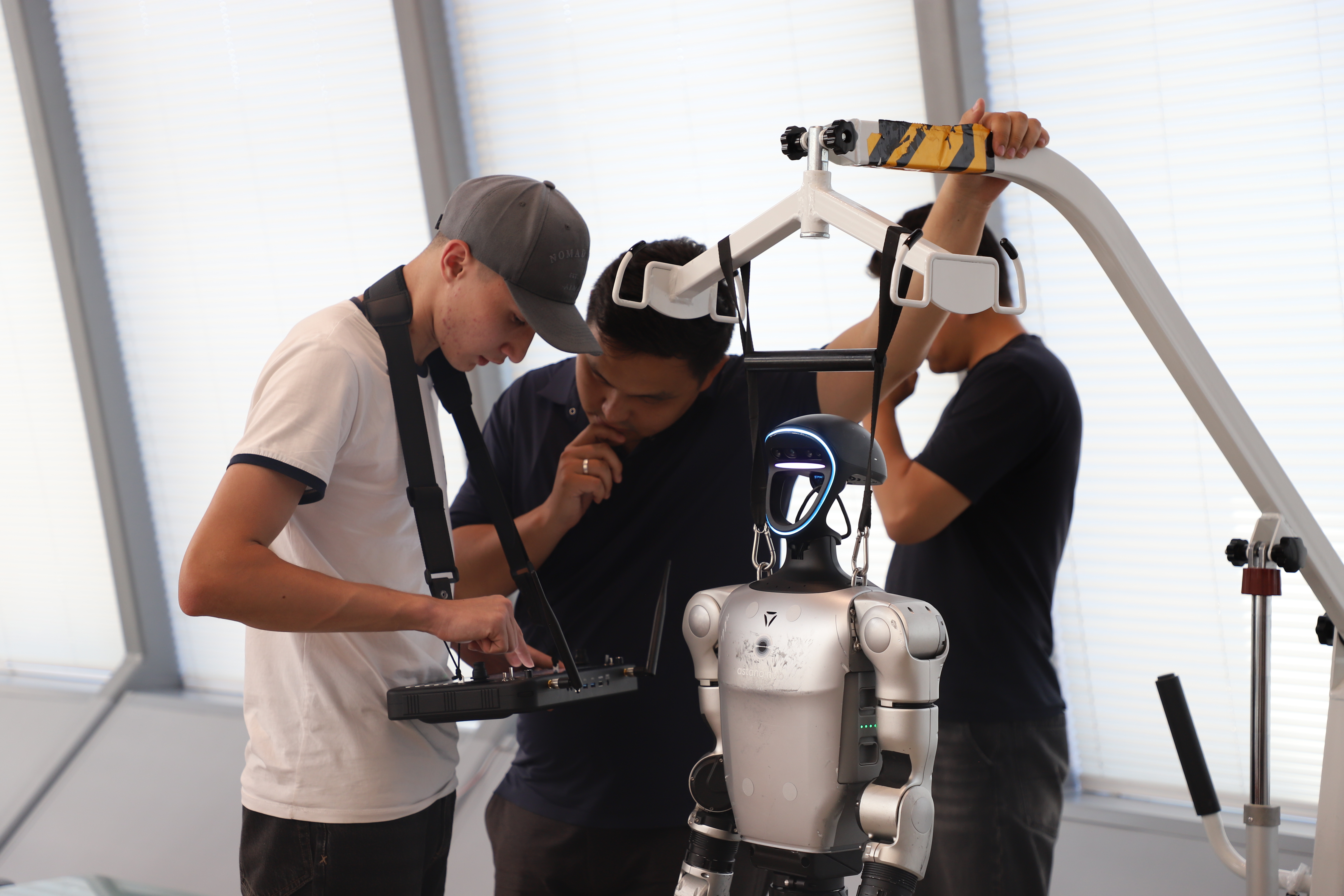






GameDev Fest 2026, a festival dedicated to Kazakhstan’s gaming industry under the theme “Systemic Development of GameDev in Kazakhstan,” was held at Astana Hub’s International AI Center Alem AI. For the first time, the festival brought together major studios, indie developers, startups, investors, educational institutions, and artists in a single space. The festival was organized by GameDev Center at Astana Hub in partnership with the Creative Industries Alliance of Kazakhstan (CIAQ).
Running throughout the day, the festival was designed not as a traditional industry meetup but as a vibrant interactive platform. Visitors explored a wide range of experiences, including an indie game showcase, the Authors’ Alley, a digital art exhibition, a VR zone, a media zone, a cosplay program, and gaming activities. A major highlight was the Demo Alley, where leading Kazakhstani studios and independent teams presented their projects. Alongside the public program, the festival hosted a business agenda featuring a strategic session, a panel discussion, and thematic talks.
The festival was opened by Anarbek Utegulov, Director of the Technology Centers Office at Astana Hub. He was followed by David Tuganov, President of CIAQ, who presented key initiatives aimed at developing Kazakhstan’s digital creative industries, including the expansion of GameDev Center, the launch of the Astana Hub GamePreneurs accelerator, the development of international partnerships, and new industry projects.
Authors’ Alley: Creativity Without Boundaries
One of the festival’s most distinctive spaces was the Authors’ Alley, where creative disciplines that rarely share the same venue were brought together: digital merchandise, stickers, and illustration stood alongside comics, posters, and digital art. The area was designed to encourage direct interaction between visitors and creators, allowing guests to learn the stories behind the works rather than simply viewing them on display.
“As the curator of the indie zone and Authors’ Alley, it was crucial for me to showcase the full scale and diversity of our community. We brought together creators from completely different fields — from unique digital merchandise and sticker artists to ceramic artisans. Creativity has no narrow boundaries, and the audience’s tremendous interest proved that completely,” said Malika Igibayeva, Founder and CEO of SHU Studio, Coordinator of the GCA Committee (GameDev, Esports, Digital Art, and Animation) of the Creative Industries Alliance of Kazakhstan, and Curator of the Indie Zone and Authors’ Alley.
Indie Games and Startups: A Stage for New Teams
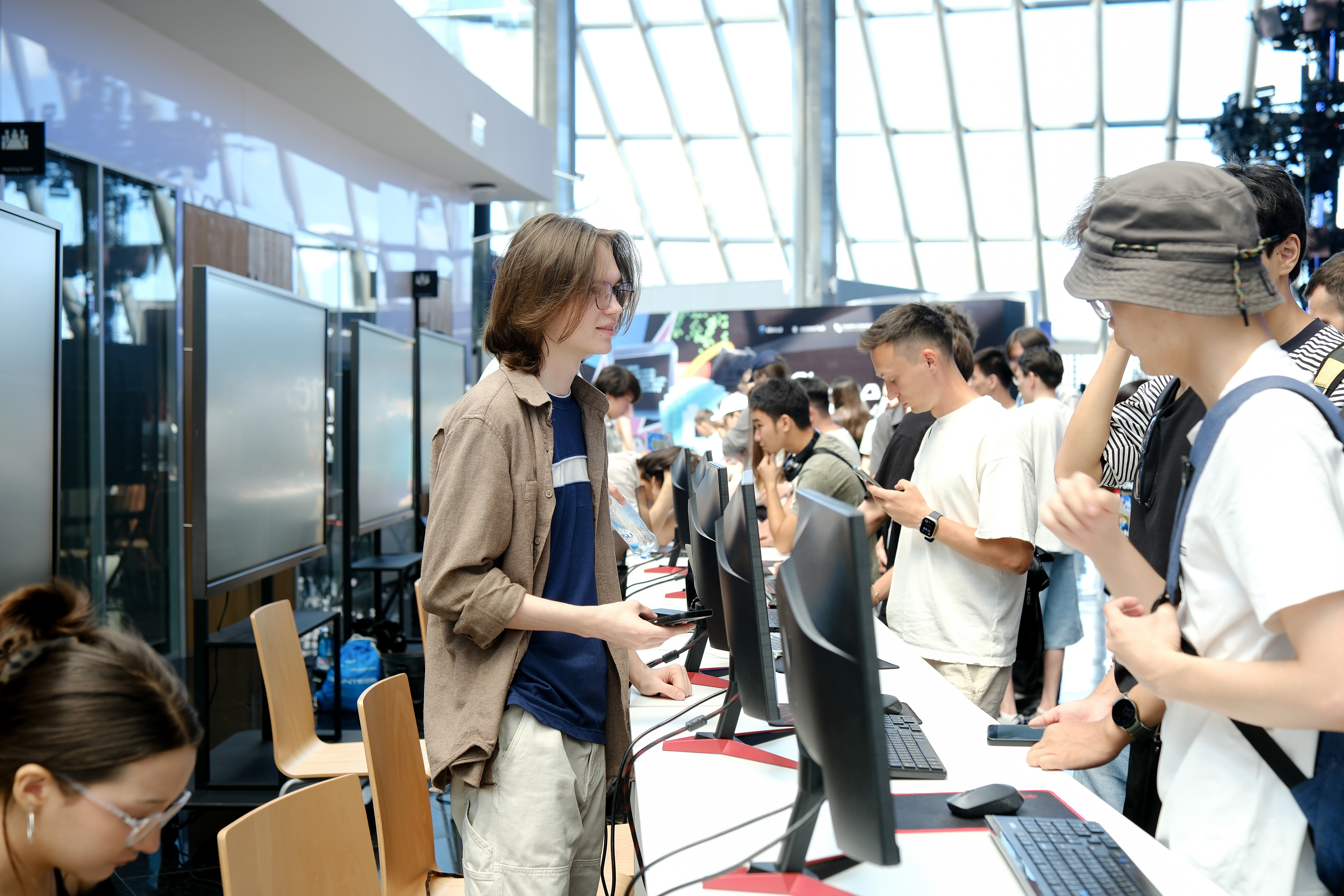
The indie developers’ zone became one of the festival’s main attractions, featuring projects from across Kazakhstan, including teams that traveled from Almaty specifically for the event. Visitors played demo versions, spoke with developers, and learned the story behind each game.
The zone featured residents of GameDev Center, laboratories from Nazarbayev University and KBTU, independent studios Visual Floss and Akira, Aipreneurs startups, and creators from various regions of Kazakhstan. More mature projects were also showcased nearby, illustrating the full growth trajectory of a game development team — from a first game jam project to a scalable commercial product.
“In the indie developers’ zone, we focused on the synergy of talent. We are actively strengthening collaboration with creators from across Kazakhstan, and it was especially valuable to see projects that traveled from Almaty specifically for the festival,” Malika Igibayeva noted.
VR Zone and Ten Winners
The festival’s technological highlight was the VR zone, featuring two projects — a VR shooter and a VR platformer. Both games were created by Kazakhstani teams and attracted long queues throughout the day. The organizers built a competitive challenge around the platformer, selecting 10 winners based on their performance. The winners received prizes from the organizers and festival partners, making the VR zone one of the busiest areas of the event.
The organizers also emphasized the handcrafted nature of the works presented in the creative zones.
“The works presented here are created by artists — everything is handmade, there is no artificial intelligence involved; these are things the creators made with their own hands. There is handmade art, there are comics, and then there is VR — projects that were also created manually, by our own Kazakhstani teams,” said Malika Igibayeva.
GameDev Fest 2026, a festival dedicated to Kazakhstan’s gaming industry under the theme “Systemic Development of GameDev in Kazakhstan,” was held at Astana Hub’s International AI Center Alem AI. For the first time, the festival brought together major studios, indie developers, startups, investors, educational institutions, and artists in a single space. The festival was organized by GameDev Center at Astana Hub in partnership with the Creative Industries Alliance of Kazakhstan (CIAQ).
Running throughout the day, the festival was designed not as a traditional industry meetup but as a vibrant interactive platform. Visitors explored a wide range of experiences, including an indie game showcase, the Authors’ Alley, a digital art exhibition, a VR zone, a media zone, a cosplay program, and gaming activities. A major highlight was the Demo Alley, where leading Kazakhstani studios and independent teams presented their projects. Alongside the public program, the festival hosted a business agenda featuring a strategic session, a panel discussion, and thematic talks.
The festival was opened by Anarbek Utegulov, Director of the Technology Centers Office at Astana Hub. He was followed by David Tuganov, President of CIAQ, who presented key initiatives aimed at developing Kazakhstan’s digital creative industries, including the expansion of GameDev Center, the launch of the Astana Hub GamePreneurs accelerator, the development of international partnerships, and new industry projects.
Authors’ Alley: Creativity Without Boundaries
One of the festival’s most distinctive spaces was the Authors’ Alley, where creative disciplines that rarely share the same venue were brought together: digital merchandise, stickers, and illustration stood alongside comics, posters, and digital art. The area was designed to encourage direct interaction between visitors and creators, allowing guests to learn the stories behind the works rather than simply viewing them on display.
“As the curator of the indie zone and Authors’ Alley, it was crucial for me to showcase the full scale and diversity of our community. We brought together creators from completely different fields — from unique digital merchandise and sticker artists to ceramic artisans. Creativity has no narrow boundaries, and the audience’s tremendous interest proved that completely,” said Malika Igibayeva, Founder and CEO of SHU Studio, Coordinator of the GCA Committee (GameDev, Esports, Digital Art, and Animation) of the Creative Industries Alliance of Kazakhstan, and Curator of the Indie Zone and Authors’ Alley.
Indie Games and Startups: A Stage for New Teams
The indie developers’ zone became one of the festival’s main attractions, featuring projects from across Kazakhstan, including teams that traveled from Almaty specifically for the event. Visitors played demo versions, spoke with developers, and learned the story behind each game.
The zone featured residents of GameDev Center, laboratories from Nazarbayev University and KBTU, independent studios Visual Floss and Akira, Aipreneurs startups, and creators from various regions of Kazakhstan. More mature projects were also showcased nearby, illustrating the full growth trajectory of a game development team — from a first game jam project to a scalable commercial product.
“In the indie developers’ zone, we focused on the synergy of talent. We are actively strengthening collaboration with creators from across Kazakhstan, and it was especially valuable to see projects that traveled from Almaty specifically for the festival,” Malika Igibayeva noted.
VR Zone and Ten Winners
The festival’s technological highlight was the VR zone, featuring two projects — a VR shooter and a VR platformer. Both games were created by Kazakhstani teams and attracted long queues throughout the day. The organizers built a competitive challenge around the platformer, selecting 10 winners based on their performance. The winners received prizes from the organizers and festival partners, making the VR zone one of the busiest areas of the event.
The organizers also emphasized the handcrafted nature of the works presented in the creative zones.
“The works presented here are created by artists — everything is handmade, there is no artificial intelligence involved; these are things the creators made with their own hands. There is handmade art, there are comics, and then there is VR — projects that were also created manually, by our own Kazakhstani teams,” said Malika Igibayeva.
 Share
Share