




From first programming lessons to international Olympiads, and from career changes to launching a startup, the first documentary produced with the support of Astana Hub explores how Kazakhstan is nurturing a generation capable of developing technology and competing globally. At its heart is human capital as the country’s greatest resource: talented people, the choices they make, and the opportunities that help them realise their potential.
Technological progress is often measured by investment volumes, company numbers and export revenues. The film looks at the people behind these figures. Teenagers exploring game development and robotics. Adults returning to their studies after a day at work. Olympiad contestants whose few hours of competition represent months of preparation.
One story follows Dasha, who combined working as a barista with her studies before securing a developer role at a German company. Another participant entered IT from a background in economics and traditional business. While learning programming from scratch, he joined a team to develop a game localisation startup. Their experiences show how access to knowledge can reshape a career and give people the chance to put previously untapped abilities to use.
These changes unfold in an environment where people from different backgrounds learn, work and build projects alongside one another. Viewers discover life at the alem.ai International Artificial Intelligence Centre and meet Tomorrow School students, teenagers at TUMO Astana and participants in the Tech Orda programme. Their stories reveal what it takes to pursue a new profession: independent study, mutual support and the determination to keep going when progress proves difficult.
From these first steps in technology, the film takes viewers to challenges on the world stage. At Northern Eurasia Camp (NEC) in Astana, finalists in the International Collegiate Programming Contest (ICPC) train to perform under strict time constraints. Here, success tests not only their knowledge but also their composure, ability to reach agreement and capacity to solve problems as a team.
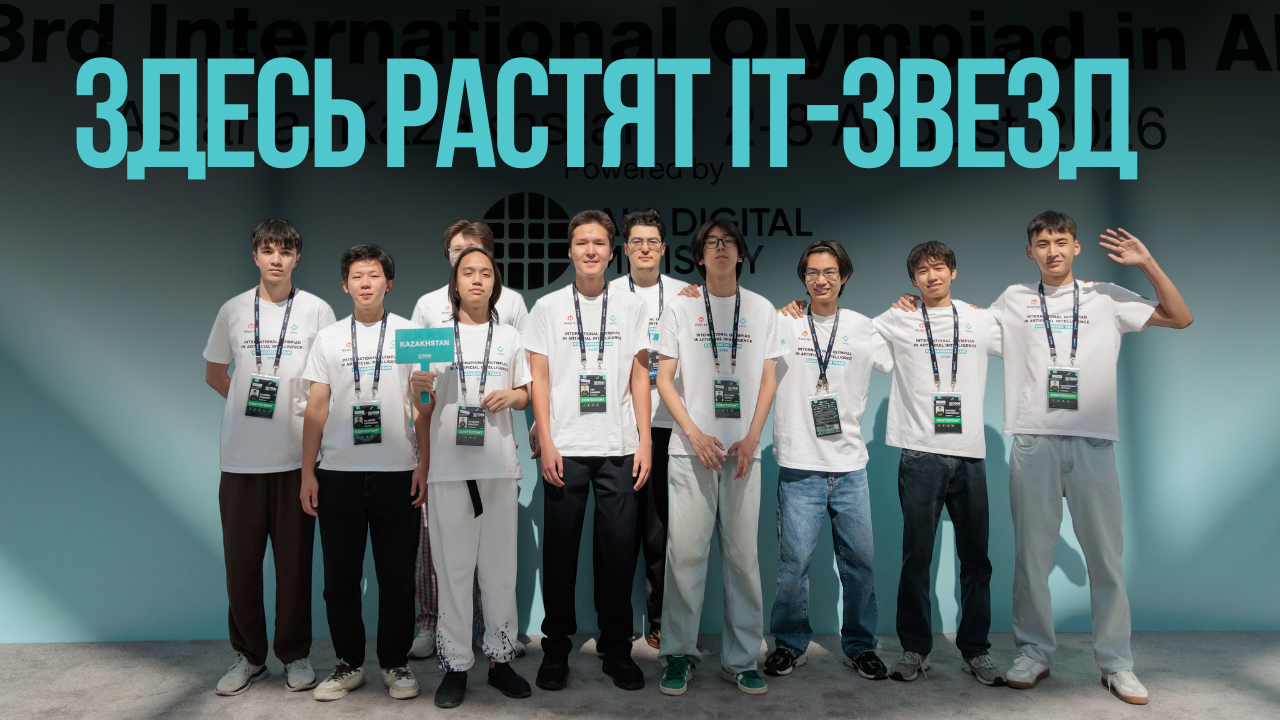
The story of the International Olympiad in Artificial Intelligence (IOAI) 2026 unfolds through the work of its organisers, scientific committee and contestants. The camera goes behind the scenes, showing how competition tasks are prepared and introducing the teams from Kazakhstan and the United States. In interviews after the final, Kazakhstan’s medallists share their joy at the results, reflect on missed opportunities and thank those who helped them along the way. One contestant has already set a new goal: helping other school students prepare for the Olympiad.
Such decisions reflect the passing on of knowledge that sustains a growing technology community. Those who once learned from others begin sharing what they know. Connections made at competitions develop into professional relationships, joint research and startups. Interviewees explain why companies value Olympiad experience and how a habit of tackling difficult problems helps people build products of their own.
Against the backdrop of rapid advances in AI, the filmmakers also examine the future of the profession itself. Why study programming when a neural network can already write code? The film’s participants reflect on the value of foundational knowledge, engineering thinking and the ability to evaluate the results technology produces. Mastering a tool is a starting point; further growth requires understanding, independence and responsibility for one’s decisions.
Together, these personal stories reveal how a country builds its intellectual potential. A teenager’s chance to discover a passion, an adult’s opportunity to enter a new profession and a young team’s ambition to make its mark internationally become part of a broader movement. The film shows why investment in human capital takes time, and how its impact emerges through people who begin teaching others, building companies and taking on more demanding challenges.
The film was produced by nFactorial with the support of the international innovation cluster Astana Hub as part of a documentary series exploring the development of IT, artificial intelligence and technology entrepreneurship.
 Share