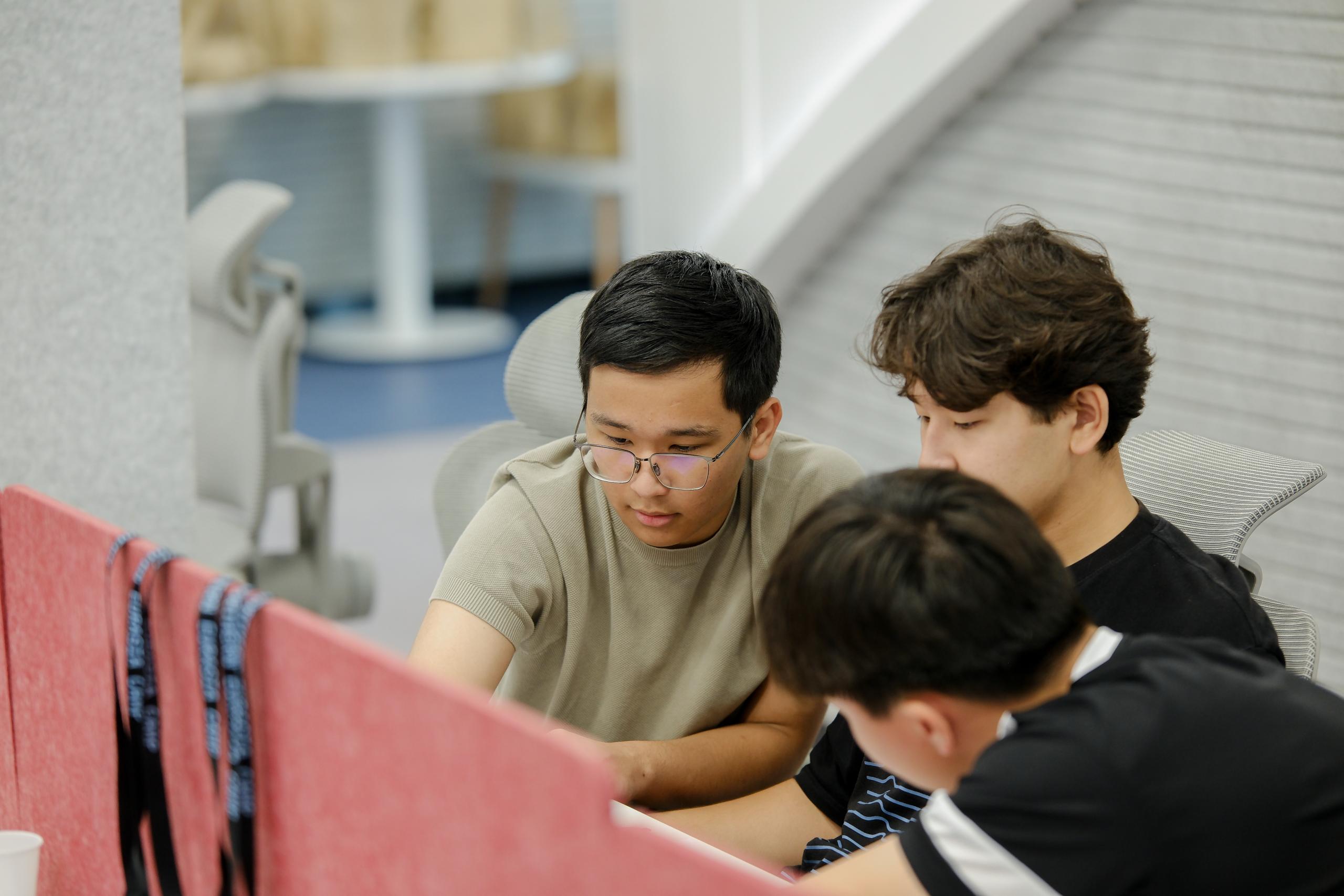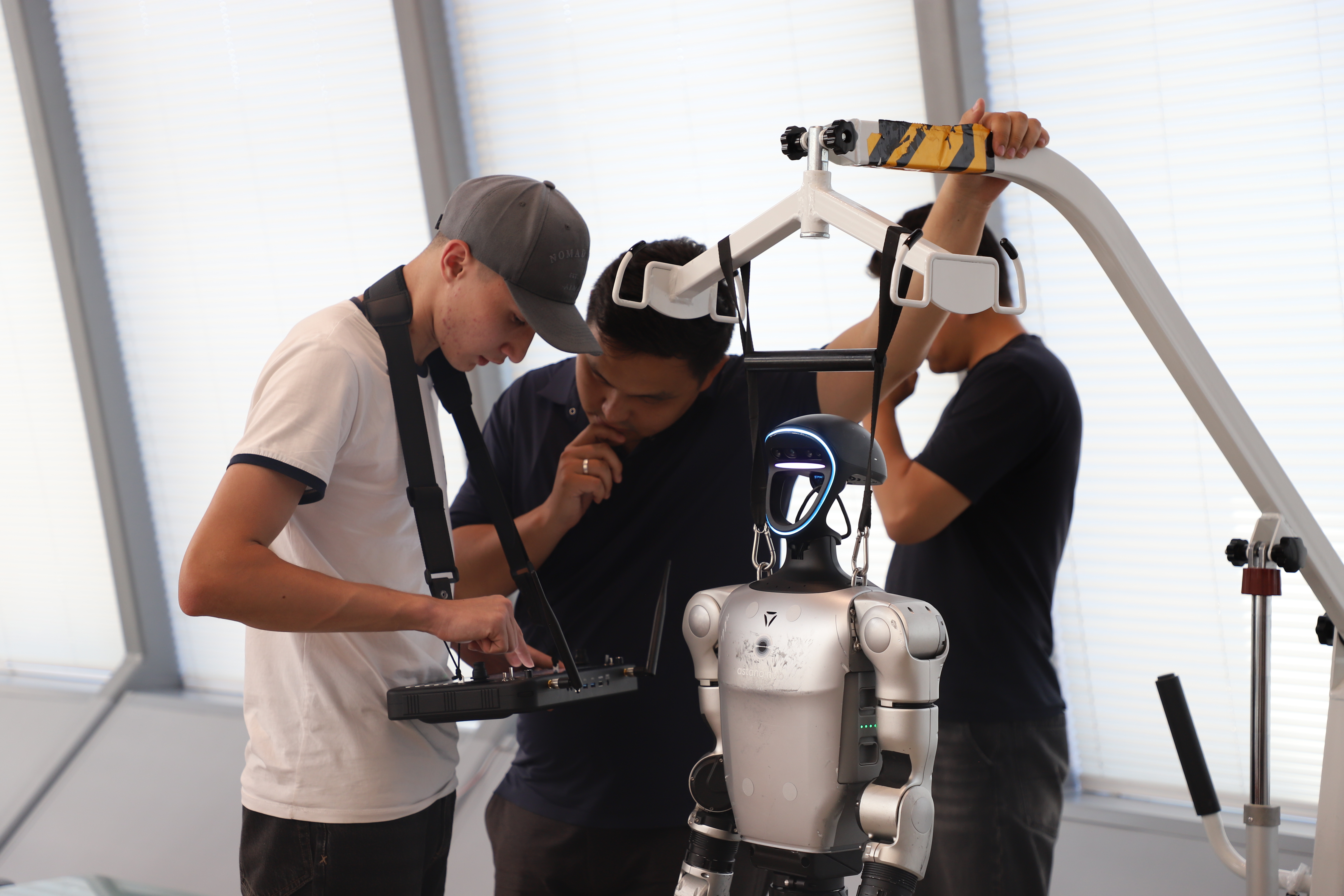
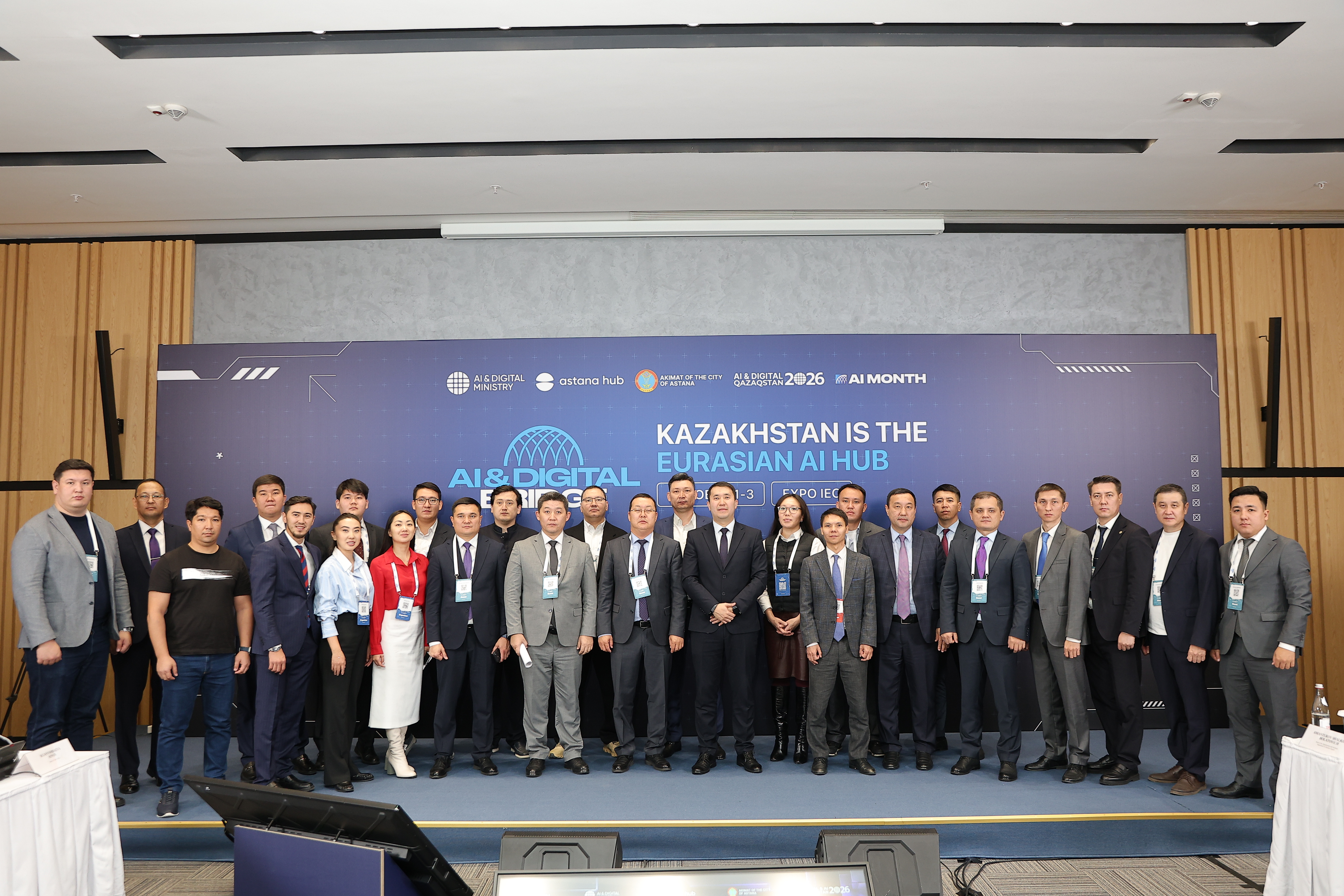





A roundtable on developing digital ecosystems across Kazakhstan’s regions and expanding access to technology, digital education and innovation infrastructure took place at the international technology forum AI & Digital Bridge 2026. Participants discussed the development of regional IT hubs, educational initiatives, Smart City projects and ways to further scale digital solutions.
“Developing a digital ecosystem means more than building infrastructure. It also means creating an environment where people in any city can learn, create technology solutions and develop their own projects. That is why we place equal importance on developing IT hubs nationwide, educational initiatives and practical digital projects at the local level. Regional priorities must become an integral part of Kazakhstan’s technological development,” said Zholdas Sakhanov, Chairman of the Committee for Digital Assets and Breakthrough Technologies at the Ministry of Artificial Intelligence and Digital Development of the Republic of Kazakhstan.
To strengthen regional IT ecosystems and support young talent, Astana Hub implements a range of nationwide programmes and initiatives focused on technology entrepreneurship, practical digital skills and support for startup initiatives.
“Since 2023, regional IT hubs have hosted more than 5,700 events, including workshops, meetups, hackathons, masterclasses, incubation programmes and Pizza Pitch sessions, attracting over 90,000 participants. We are creating an environment in the regions where talented people can gain knowledge, find like-minded peers, launch technology projects and build careers without having to relocate in search of opportunities. Access to quality education, a professional community and tangible opportunities for growth helps unlock the regions’ potential and develop a new pool of IT talent for the entire country,” said Nurzhan Sagyndyk, Director of the Regional Development Office at Astana Hub.
In 2025, the Startup Orda regional incubation programme was launched across all 16 regions of Kazakhstan for the first time. The programme supports early-stage startups and technology entrepreneurs, develops entrepreneurial and product skills, and prepares projects for further growth and scaling. A total of 205 participants successfully completed the programme. In 2026, it continued as Startup Orda 2.0, bringing together more than 450 participants. Another key initiative is Decentrathon, a nationwide hackathon organised by Astana Hub in partnership with the Blockchain and AI Technology Center (BAITC), with support from the Ministry of Artificial Intelligence and Digital Development of the Republic of Kazakhstan.
Smart City development was another focus of the roundtable. Participants presented ongoing digital projects and discussed the further deployment of solutions designed to improve the efficiency of urban infrastructure and the quality of public and municipal services.
“For the Akmola Region, Smart City development is part of a broader Smart Region model. This goes beyond introducing individual digital services, cameras or monitoring systems. It is about building a unified regional digital environment where data, analytics and artificial intelligence help identify problems promptly, inform management decisions and monitor their implementation. Today, we are steadily developing digital services and infrastructure management systems. Our next task is to integrate them into a unified architecture, improve public and municipal services, and create a convenient and secure digital environment for residents across the region,” said Magzhan Yerzhan, Head of the Department of Digitalisation and Archives of the Akmola Region.
Participants also discussed the results of Tomorrow School, Kazakhstan’s first peer-to-peer school of artificial intelligence and programming. The project is implemented by the Ministry of Artificial Intelligence and Digital Development of the Republic of Kazakhstan, the Astana Hub International Innovation Cluster and the Alem.ai Foundation Corporate Fund, in partnership with regional administrations. Tuition is free, and no prior programming experience is required. Since the programme began expanding into the regions, it has received more than 6,000 applications, with the strongest interest coming from residents of Shymkent, Uralsk, Kokshetau and Pavlodar. Regional campuses work with local IT hubs, universities and colleges to organise hackathons, open days and practical workshops on AI and programming, covering everything from the fundamentals of AI and generative models to application development, data analysis and building original AI solutions.
“The main goal of the regional network is to ensure that talented people do not have to move to Astana or Almaty to access high-quality IT education. Within just a few months, campuses opened in 13 regions, and more than 6,000 applications demonstrate the strong demand for this kind of learning locally. Our task now is to help these students secure real jobs in the industry, including in their home regions. We have no lectures in the conventional sense and no requirements for a degree or prior experience. We focus on the ability to learn. Someone who has never programmed before can progress to a level where employers are ready to hire them. Our students are finding jobs while still studying, and for us, that is the strongest evidence that the model works,” said Olzhas Urazalin, Head of the Tomorrow School Project.
The roundtable also highlighted the results of TUMO Astana, a supplementary education centre for teenagers aged 12 to 18. The programme is entirely free and has no entry requirements, allowing teenagers to explore their interests and develop practical skills regardless of their previous experience. Learning is offered across 11 fields, including generative artificial intelligence, programming, robotics, animation, digital music, filmmaking and other areas of digital creativity.
“Above all, TUMO Astana is a space where every child can discover their talents and interests. Interest in the programme demonstrates strong demand for this learning format: a total of 4,886 participants have registered since its launch, and more than 2,200 students now attend classes regularly. We want every child, wherever they live, to have the opportunity to experiment, create their own projects and realise their potential through modern technology. That is why we plan to scale the TUMO Astana model and expand its presence to other cities in Kazakhstan, giving more teenagers access to modern education and opportunities to bring their ideas to life,” said Ainur Kuanyshbayeva, Head of the TUMO Astana Office.
TUMO Astana’s fourth cohort will begin on 12 October, giving more than 450 new students the opportunity to join the programme and develop skills in technology and digital creativity.
AI & Digital Bridge 2026 took place as part of Kazakhstan’s Year of Digitalisation and Artificial Intelligence and served as the flagship international event of AI MONTH, a month-long series of events bringing together initiatives in artificial intelligence, digital technology, entrepreneurship and human capital development.
AI & Digital Bridge 2026 was organised by the Astana Hub International Innovation Cluster in partnership with the Ministry of Artificial Intelligence and Digital Development of the Republic of Kazakhstan and the Astana City Administration.
AI & Digital Bridge 2026 was funded through sponsorship contributions, with support from the forum’s partners.
Gold Partners: Freedom Bank, Kaspi Bank, Samruk-Kazyna JSC, Kazakhtelecom JSC.
Silver Partner: Halyk Bank.
Business Partner: Beeline Kazakhstan.
Bronze Partner: Yandex Qazaqstan.
Telecom Partner: Freedom Telecom Operations.
Technology Partner: Transtelecom JSC.
Official Airline Partner: Air Astana.
A roundtable on developing digital ecosystems across Kazakhstan’s regions and expanding access to technology, digital education and innovation infrastructure took place at the international technology forum AI & Digital Bridge 2026. Participants discussed the development of regional IT hubs, educational initiatives, Smart City projects and ways to further scale digital solutions.
“Developing a digital ecosystem means more than building infrastructure. It also means creating an environment where people in any city can learn, create technology solutions and develop their own projects. That is why we place equal importance on developing IT hubs nationwide, educational initiatives and practical digital projects at the local level. Regional priorities must become an integral part of Kazakhstan’s technological development,” said Zholdas Sakhanov, Chairman of the Committee for Digital Assets and Breakthrough Technologies at the Ministry of Artificial Intelligence and Digital Development of the Republic of Kazakhstan.
To strengthen regional IT ecosystems and support young talent, Astana Hub implements a range of nationwide programmes and initiatives focused on technology entrepreneurship, practical digital skills and support for startup initiatives.
“Since 2023, regional IT hubs have hosted more than 5,700 events, including workshops, meetups, hackathons, masterclasses, incubation programmes and Pizza Pitch sessions, attracting over 90,000 participants. We are creating an environment in the regions where talented people can gain knowledge, find like-minded peers, launch technology projects and build careers without having to relocate in search of opportunities. Access to quality education, a professional community and tangible opportunities for growth helps unlock the regions’ potential and develop a new pool of IT talent for the entire country,” said Nurzhan Sagyndyk, Director of the Regional Development Office at Astana Hub.
In 2025, the Startup Orda regional incubation programme was launched across all 16 regions of Kazakhstan for the first time. The programme supports early-stage startups and technology entrepreneurs, develops entrepreneurial and product skills, and prepares projects for further growth and scaling. A total of 205 participants successfully completed the programme. In 2026, it continued as Startup Orda 2.0, bringing together more than 450 participants. Another key initiative is Decentrathon, a nationwide hackathon organised by Astana Hub in partnership with the Blockchain and AI Technology Center (BAITC), with support from the Ministry of Artificial Intelligence and Digital Development of the Republic of Kazakhstan.
Smart City development was another focus of the roundtable. Participants presented ongoing digital projects and discussed the further deployment of solutions designed to improve the efficiency of urban infrastructure and the quality of public and municipal services.
“For the Akmola Region, Smart City development is part of a broader Smart Region model. This goes beyond introducing individual digital services, cameras or monitoring systems. It is about building a unified regional digital environment where data, analytics and artificial intelligence help identify problems promptly, inform management decisions and monitor their implementation. Today, we are steadily developing digital services and infrastructure management systems. Our next task is to integrate them into a unified architecture, improve public and municipal services, and create a convenient and secure digital environment for residents across the region,” said Magzhan Yerzhan, Head of the Department of Digitalisation and Archives of the Akmola Region.
Participants also discussed the results of Tomorrow School, Kazakhstan’s first peer-to-peer school of artificial intelligence and programming. The project is implemented by the Ministry of Artificial Intelligence and Digital Development of the Republic of Kazakhstan, the Astana Hub International Innovation Cluster and the Alem.ai Foundation Corporate Fund, in partnership with regional administrations. Tuition is free, and no prior programming experience is required. Since the programme began expanding into the regions, it has received more than 6,000 applications, with the strongest interest coming from residents of Shymkent, Uralsk, Kokshetau and Pavlodar. Regional campuses work with local IT hubs, universities and colleges to organise hackathons, open days and practical workshops on AI and programming, covering everything from the fundamentals of AI and generative models to application development, data analysis and building original AI solutions.
“The main goal of the regional network is to ensure that talented people do not have to move to Astana or Almaty to access high-quality IT education. Within just a few months, campuses opened in 13 regions, and more than 6,000 applications demonstrate the strong demand for this kind of learning locally. Our task now is to help these students secure real jobs in the industry, including in their home regions. We have no lectures in the conventional sense and no requirements for a degree or prior experience. We focus on the ability to learn. Someone who has never programmed before can progress to a level where employers are ready to hire them. Our students are finding jobs while still studying, and for us, that is the strongest evidence that the model works,” said Olzhas Urazalin, Head of the Tomorrow School Project.
The roundtable also highlighted the results of TUMO Astana, a supplementary education centre for teenagers aged 12 to 18. The programme is entirely free and has no entry requirements, allowing teenagers to explore their interests and develop practical skills regardless of their previous experience. Learning is offered across 11 fields, including generative artificial intelligence, programming, robotics, animation, digital music, filmmaking and other areas of digital creativity.
“Above all, TUMO Astana is a space where every child can discover their talents and interests. Interest in the programme demonstrates strong demand for this learning format: a total of 4,886 participants have registered since its launch, and more than 2,200 students now attend classes regularly. We want every child, wherever they live, to have the opportunity to experiment, create their own projects and realise their potential through modern technology. That is why we plan to scale the TUMO Astana model and expand its presence to other cities in Kazakhstan, giving more teenagers access to modern education and opportunities to bring their ideas to life,” said Ainur Kuanyshbayeva, Head of the TUMO Astana Office.
TUMO Astana’s fourth cohort will begin on 12 October, giving more than 450 new students the opportunity to join the programme and develop skills in technology and digital creativity.
AI & Digital Bridge 2026 took place as part of Kazakhstan’s Year of Digitalisation and Artificial Intelligence and served as the flagship international event of AI MONTH, a month-long series of events bringing together initiatives in artificial intelligence, digital technology, entrepreneurship and human capital development.
AI & Digital Bridge 2026 was organised by the Astana Hub International Innovation Cluster in partnership with the Ministry of Artificial Intelligence and Digital Development of the Republic of Kazakhstan and the Astana City Administration.
AI & Digital Bridge 2026 was funded through sponsorship contributions, with support from the forum’s partners.
Gold Partners: Freedom Bank, Kaspi Bank, Samruk-Kazyna JSC, Kazakhtelecom JSC.
Silver Partner: Halyk Bank.
Business Partner: Beeline Kazakhstan.
Bronze Partner: Yandex Qazaqstan.
Telecom Partner: Freedom Telecom Operations.
Technology Partner: Transtelecom JSC.
Official Airline Partner: Air Astana.
 Share
Share