
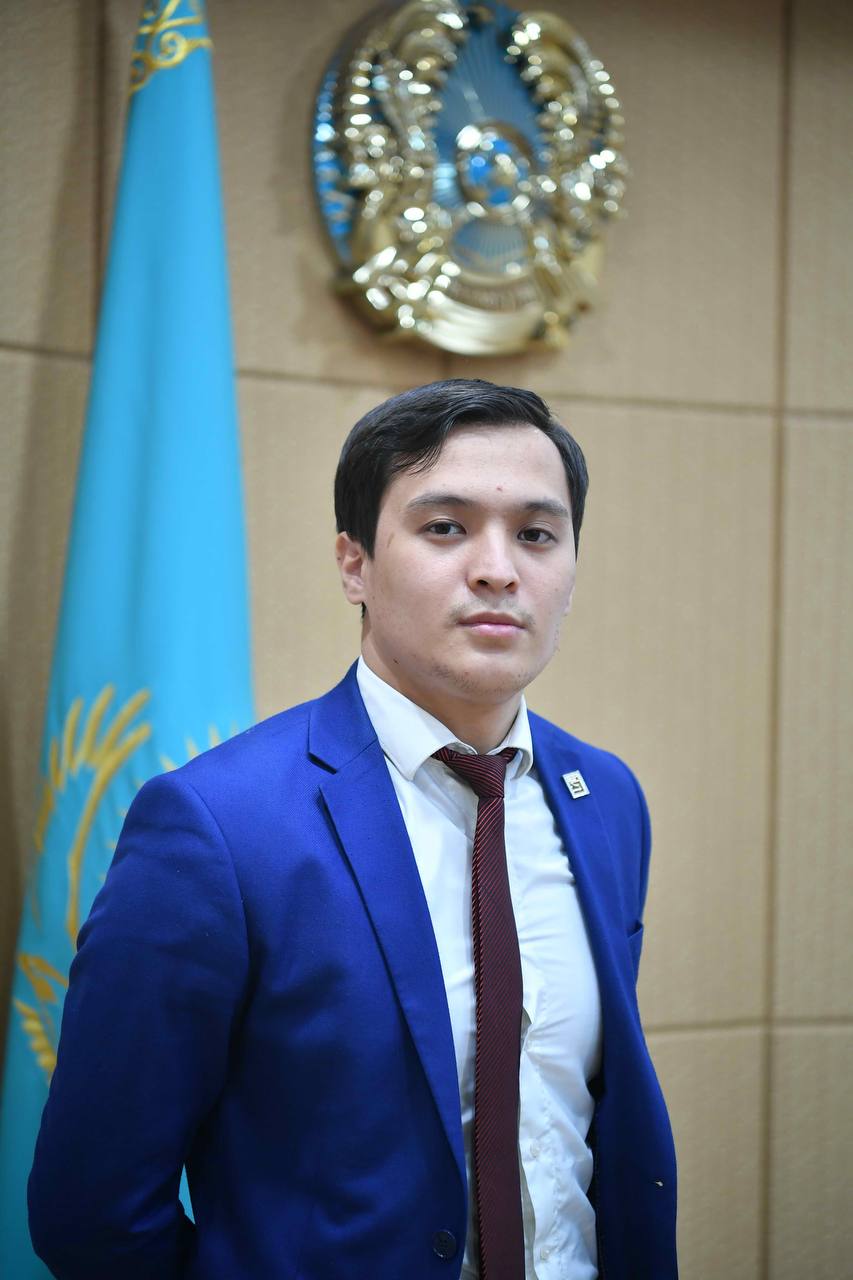





Azat is 31 years old. Before joining the Tech Orda program, he worked as a system administrator, managing the company’s server and network infrastructure, providing technical support, and overseeing other internal IT processes. Although his work was already closely connected to technology, Azat wanted to continue developing professionally, take on larger-scale challenges, and contribute to the digitalization of business processes.
The six-month online program gave him an opportunity to consolidate his knowledge, gain practical experience, and transition into IT architecture. We spoke with the Tech Orda graduate about the application process, the challenges of balancing work and study, and why completing the course is only the beginning of one’s professional journey.
— What did you do before joining Tech Orda?
— I worked as a system administrator at the same company where I am still employed today. I was responsible for the technical side of operations, including server and network infrastructure, technical support, and other related tasks.
I was already working in IT and developing my skills independently, but I did not always have enough time for comprehensive training.
— Why did you decide to take your professional development in a new direction?
— I did not want to stand still. Kazakhstan’s IT sector is developing rapidly, creating new fields and opportunities. At some point, I realized that I had reached a certain professional ceiling in my previous position and wanted to move forward.
A great deal depends on the individual. If someone is genuinely committed to growing, willing to take risks, learn, and dedicate time to it, they can change the course of their career. For me, the training was an opportunity to take the next step.
— What was the format of the training?
— The program lasted six months and was delivered online. This format allowed me to combine my studies with my full-time job, although it required discipline and effective time management.
— What did you enjoy most about the learning process?
— First and foremost, I appreciated the practical approach. The mentor was always available and used specific examples to demonstrate how to complete various tasks. It was not simply about studying theory—we could immediately see how the knowledge we gained was applied in practice.
I also enjoyed the community that formed around the school. We had highly skilled coordinators and instructors, as well as participants who were genuinely interested in professional development. This environment provided additional motivation to continue learning.
— What was the most challenging part?
— At first, the greatest challenge was getting accepted into the program. I was able to join largely because I clearly explained my motivation and why this opportunity mattered to me. After that, I was allowed to take part in the first stage of the selection process.
During the program itself, the main challenge was balancing my studies with work. I had to complete my professional responsibilities while also finding time to study. The program lasted six months, and it was important not to give up halfway through. Some participants dropped out after three or four months, so I was determined to maintain my pace and complete the program.
— How did Tech Orda influence your career?
— Thanks to the training, I was able to move into a new role and begin working in IT architecture. I already had practical experience in IT, but I lacked specialized training and a formal qualification confirming my knowledge. Completing Tech Orda became one of the key factors that supported my career transition.
The program gave me the foundation I needed and helped me take the next step in my career.
— How do your current responsibilities differ from your previous ones?
— I now work on automation and digitalization processes. My responsibilities have become more complex, large-scale, and demanding. Today, I not only support existing infrastructure but also contribute to decision-making related to the development of IT systems and architecture.
Working in this field requires a comprehensive understanding of processes. You need to look beyond an individual technical task and understand how the proposed solution will affect the entire system.
— What advice would you give to those planning to start a career in IT or apply for Tech Orda?
— I would advise them not to be afraid and to take the first step. Submitting an application does not mean that results will come immediately, but every decision you make brings you closer to your goal.
At the same time, it is important to understand that completing a course does not guarantee immediate employment. After graduation, there may be a period when you need to continue developing your skills independently, look for opportunities, attend interviews, and demonstrate your knowledge in practice.
Special attention should be paid to the fundamentals, as they underpin every project and development process. Architecture, refactoring, and more advanced technical solutions come later. Without a solid foundation, progressing further will be significantly more difficult.
The most important thing is not to stop after completing the course. The training provides knowledge and direction, but the outcome ultimately depends on the individual.
Applications for the Tech Orda training program are open until September 21. You can apply and learn more about the participation requirements on the Astana Hub platform.
Azat is 31 years old. Before joining the Tech Orda program, he worked as a system administrator, managing the company’s server and network infrastructure, providing technical support, and overseeing other internal IT processes. Although his work was already closely connected to technology, Azat wanted to continue developing professionally, take on larger-scale challenges, and contribute to the digitalization of business processes.
The six-month online program gave him an opportunity to consolidate his knowledge, gain practical experience, and transition into IT architecture. We spoke with the Tech Orda graduate about the application process, the challenges of balancing work and study, and why completing the course is only the beginning of one’s professional journey.
— What did you do before joining Tech Orda?
— I worked as a system administrator at the same company where I am still employed today. I was responsible for the technical side of operations, including server and network infrastructure, technical support, and other related tasks.
I was already working in IT and developing my skills independently, but I did not always have enough time for comprehensive training.
— Why did you decide to take your professional development in a new direction?
— I did not want to stand still. Kazakhstan’s IT sector is developing rapidly, creating new fields and opportunities. At some point, I realized that I had reached a certain professional ceiling in my previous position and wanted to move forward.
A great deal depends on the individual. If someone is genuinely committed to growing, willing to take risks, learn, and dedicate time to it, they can change the course of their career. For me, the training was an opportunity to take the next step.
— What was the format of the training?
— The program lasted six months and was delivered online. This format allowed me to combine my studies with my full-time job, although it required discipline and effective time management.
— What did you enjoy most about the learning process?
— First and foremost, I appreciated the practical approach. The mentor was always available and used specific examples to demonstrate how to complete various tasks. It was not simply about studying theory—we could immediately see how the knowledge we gained was applied in practice.
I also enjoyed the community that formed around the school. We had highly skilled coordinators and instructors, as well as participants who were genuinely interested in professional development. This environment provided additional motivation to continue learning.
— What was the most challenging part?
— At first, the greatest challenge was getting accepted into the program. I was able to join largely because I clearly explained my motivation and why this opportunity mattered to me. After that, I was allowed to take part in the first stage of the selection process.
During the program itself, the main challenge was balancing my studies with work. I had to complete my professional responsibilities while also finding time to study. The program lasted six months, and it was important not to give up halfway through. Some participants dropped out after three or four months, so I was determined to maintain my pace and complete the program.
— How did Tech Orda influence your career?
— Thanks to the training, I was able to move into a new role and begin working in IT architecture. I already had practical experience in IT, but I lacked specialized training and a formal qualification confirming my knowledge. Completing Tech Orda became one of the key factors that supported my career transition.
The program gave me the foundation I needed and helped me take the next step in my career.
— How do your current responsibilities differ from your previous ones?
— I now work on automation and digitalization processes. My responsibilities have become more complex, large-scale, and demanding. Today, I not only support existing infrastructure but also contribute to decision-making related to the development of IT systems and architecture.
Working in this field requires a comprehensive understanding of processes. You need to look beyond an individual technical task and understand how the proposed solution will affect the entire system.
— What advice would you give to those planning to start a career in IT or apply for Tech Orda?
— I would advise them not to be afraid and to take the first step. Submitting an application does not mean that results will come immediately, but every decision you make brings you closer to your goal.
At the same time, it is important to understand that completing a course does not guarantee immediate employment. After graduation, there may be a period when you need to continue developing your skills independently, look for opportunities, attend interviews, and demonstrate your knowledge in practice.
Special attention should be paid to the fundamentals, as they underpin every project and development process. Architecture, refactoring, and more advanced technical solutions come later. Without a solid foundation, progressing further will be significantly more difficult.
The most important thing is not to stop after completing the course. The training provides knowledge and direction, but the outcome ultimately depends on the individual.
Applications for the Tech Orda training program are open until September 21. You can apply and learn more about the participation requirements on the Astana Hub platform.

 Share
Share