
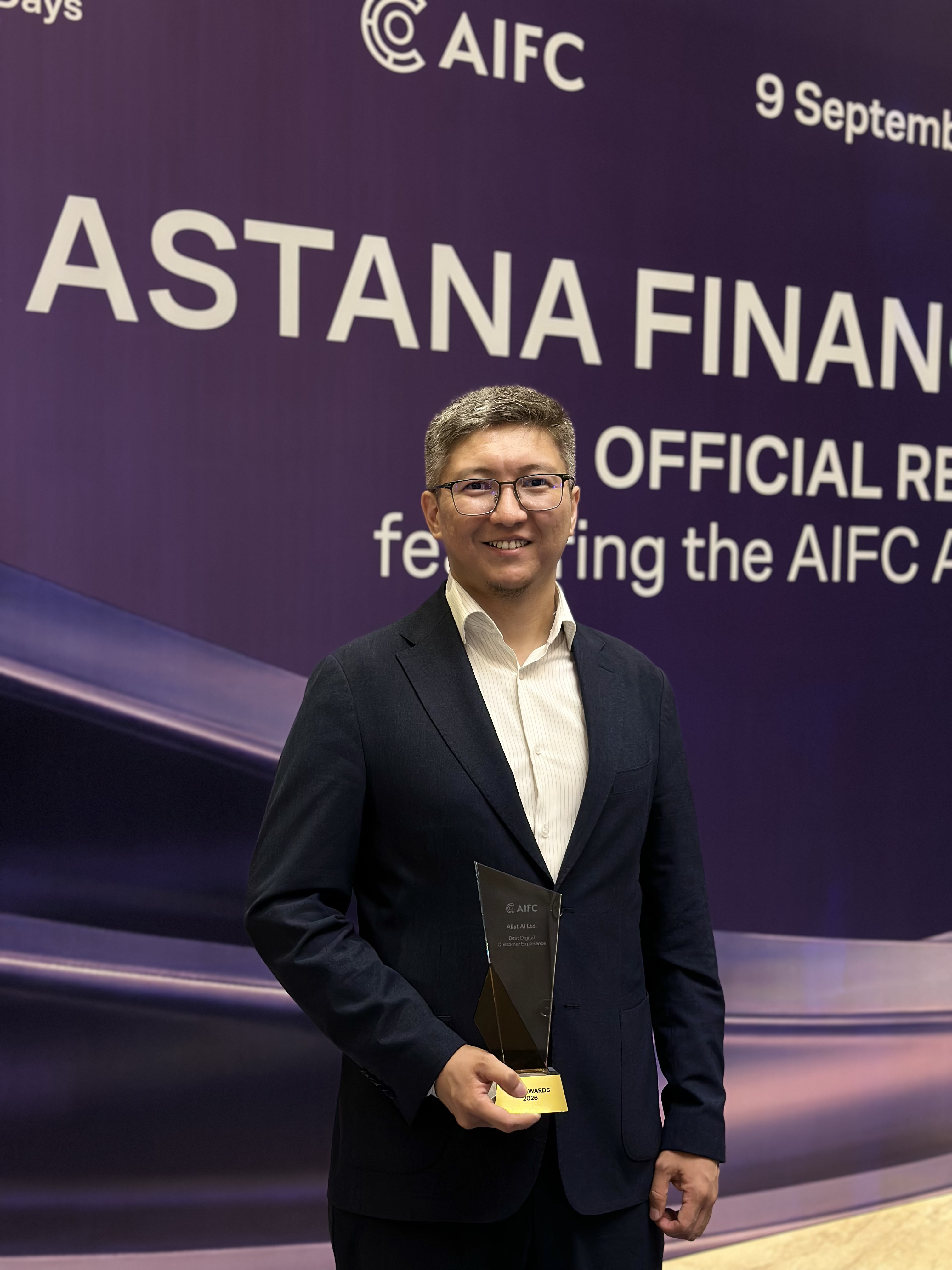





Ailat, a Kazakhstan-based fintech company and Astana Hub participant, has won the Astana International Financial Centre (AIFC) Award in the Best Digital Customer Experience category. The award was presented on 10 September during the annual Astana Finance Days 2026 forum.
The award recognizes the company’s contribution to the digitalization of Islamic finance in Central Asia. One of the ecosystem’s key products is the Ailat AI Stock Screening API, a B2B solution that automatically screens securities for compliance with Islamic finance principles.
Ailat’s technology has been integrated into the products of several financial institutions and investment platforms in Kazakhstan, including Paidax, Teniz Capital’s Tabys Islamic platform, Halyk Finance, and Halyk Bank. Through these integrations, users gain access to up-to-date information on whether investment instruments comply with ethical standards and Islamic finance principles.
The Ailat AI Stock Screening API enables financial institutions to display real-time compliance statuses for more than 5,400 securities listed on Nasdaq, ITS, and KASE. The screening process is conducted in accordance with the international standards of the Accounting and Auditing Organization for Islamic Financial Institutions (AAOIFI).
“Recognition at Astana Finance Days sends an important signal to the entire financial sector across the region. Islamic finance is moving beyond being a niche area with a high barrier to entry and is becoming more accessible through technology. Developing an in-house screening system requires financial institutions to invest considerable resources, time, and specialized expertise. At Ailat, we have combined artificial intelligence with the expertise of an independent Shariah board to help companies implement such solutions more efficiently. As a result, investing becomes more convenient, transparent, and ethical for retail investors,” said Saule Shemen, Head of Ailat AI.
One of the key challenges addressed by the company’s API is reducing the time between the publication of financial statements and the updating of securities data. The AI-powered system automatically monitors newly released corporate financial reports and updates information on compliance with Islamic finance principles within five days of publication.
“We take a comprehensive approach to developing Islamic finance. Our ecosystem includes a licensed company that provides financing to small businesses and self-employed individuals in accordance with Islamic finance principles. In addition to our technology API, we are developing consulting and infrastructure solutions that help businesses launch their own products. The Ailat Finance team is also currently working on an Islamic mortgage product,” said Azat Otepbay, founder of the Ailat ecosystem.
Today, the Ailat ecosystem brings together technology, consulting, and infrastructure solutions designed to facilitate the adoption of Islamic finance principles. The company continues to develop digital products for financial institutions, businesses, and individual users.
Ailat, a Kazakhstan-based fintech company and Astana Hub participant, has won the Astana International Financial Centre (AIFC) Award in the Best Digital Customer Experience category. The award was presented on 10 September during the annual Astana Finance Days 2026 forum.
The award recognizes the company’s contribution to the digitalization of Islamic finance in Central Asia. One of the ecosystem’s key products is the Ailat AI Stock Screening API, a B2B solution that automatically screens securities for compliance with Islamic finance principles.
Ailat’s technology has been integrated into the products of several financial institutions and investment platforms in Kazakhstan, including Paidax, Teniz Capital’s Tabys Islamic platform, Halyk Finance, and Halyk Bank. Through these integrations, users gain access to up-to-date information on whether investment instruments comply with ethical standards and Islamic finance principles.
The Ailat AI Stock Screening API enables financial institutions to display real-time compliance statuses for more than 5,400 securities listed on Nasdaq, ITS, and KASE. The screening process is conducted in accordance with the international standards of the Accounting and Auditing Organization for Islamic Financial Institutions (AAOIFI).
“Recognition at Astana Finance Days sends an important signal to the entire financial sector across the region. Islamic finance is moving beyond being a niche area with a high barrier to entry and is becoming more accessible through technology. Developing an in-house screening system requires financial institutions to invest considerable resources, time, and specialized expertise. At Ailat, we have combined artificial intelligence with the expertise of an independent Shariah board to help companies implement such solutions more efficiently. As a result, investing becomes more convenient, transparent, and ethical for retail investors,” said Saule Shemen, Head of Ailat AI.
One of the key challenges addressed by the company’s API is reducing the time between the publication of financial statements and the updating of securities data. The AI-powered system automatically monitors newly released corporate financial reports and updates information on compliance with Islamic finance principles within five days of publication.
“We take a comprehensive approach to developing Islamic finance. Our ecosystem includes a licensed company that provides financing to small businesses and self-employed individuals in accordance with Islamic finance principles. In addition to our technology API, we are developing consulting and infrastructure solutions that help businesses launch their own products. The Ailat Finance team is also currently working on an Islamic mortgage product,” said Azat Otepbay, founder of the Ailat ecosystem.
Today, the Ailat ecosystem brings together technology, consulting, and infrastructure solutions designed to facilitate the adoption of Islamic finance principles. The company continues to develop digital products for financial institutions, businesses, and individual users.

 Share
Share