
The post has been translated automatically. Original language: Russian



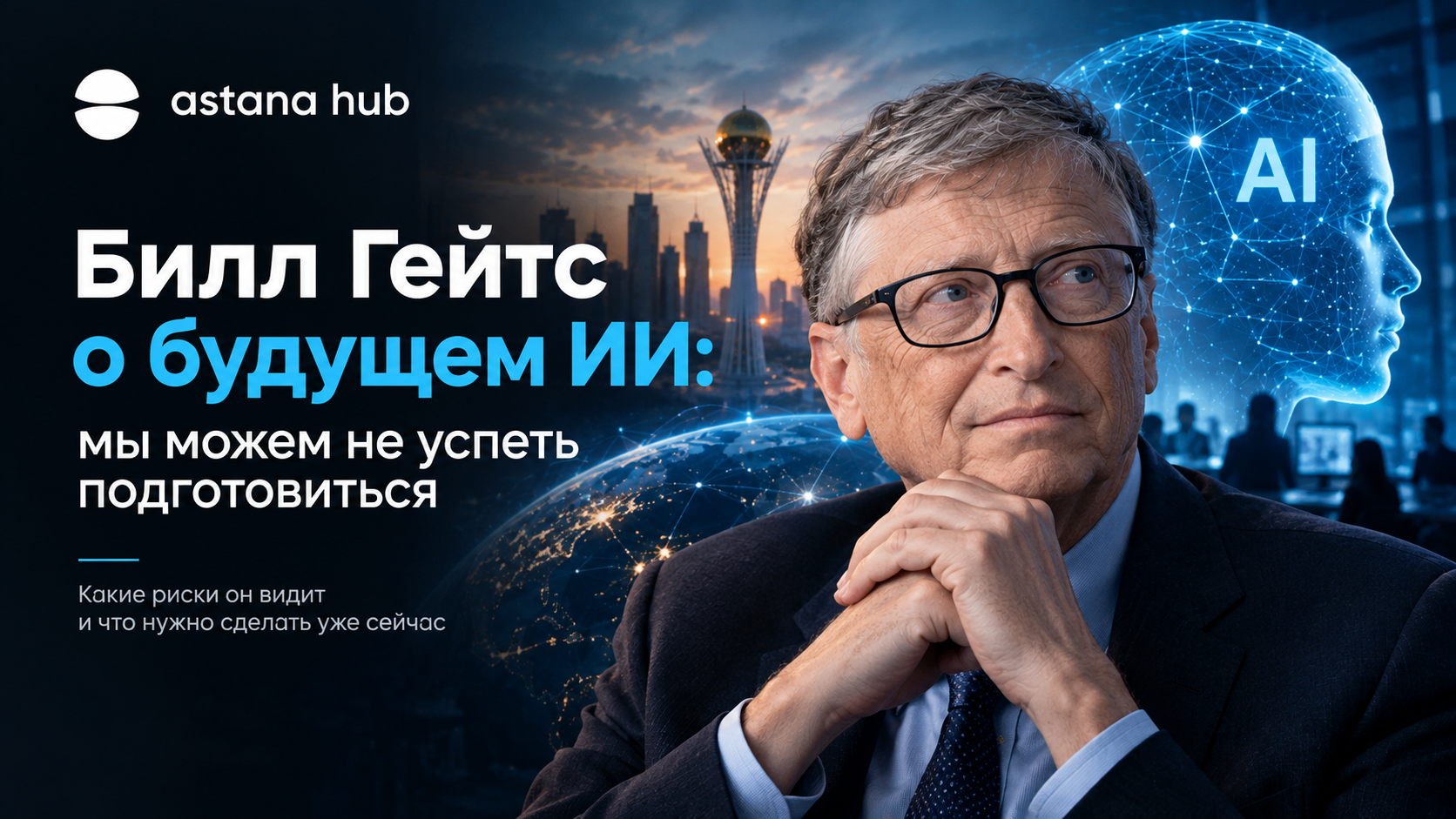
Bill Gates is talking about artificial intelligence again — and this time his main question is not how smart neural networks will become.
His concern is whether society will have time to adapt to the changes that AI will bring.
In a recent interview, Gates said that governments around the world are not yet sufficiently prepared for the consequences of the development of artificial intelligence. Among the main risks, he highlights the disappearance of some professions, cyber threats and the possibility that the benefits of the new technology will be distributed extremely unevenly.
At the same time, his position is not limited to the scenario "AI will destroy jobs."
Gates believes that artificial intelligence has the potential to significantly improve healthcare, education, and agriculture. That is why, in his opinion, it is important not just to discuss risks, but to create conditions under which technology will benefit the widest possible range of people.
In fact, the issue is gradually changing.
We used to ask: "What is artificial intelligence capable of?"
Now it's much more important to ask, "Are we ready for what he's already capable of?"
If AI really continues to develop at the current pace, the changes will affect not only programmers and IT companies. They will cover education, business, public services, medicine and almost any profession where a significant part of the work is related to information.
And here comes the paradox.
Technology is developing at a tremendous rate, while education, legislation, and the labor market are changing much more slowly.
Gates believes that this gap may become one of the main problems of the coming years.
Therefore, the future of AI is not just a story about new models and more powerful computers.
This is a story about how quickly a person can rebuild their own skills and institutions around a new technology.
""And perhaps the main question of the next decade will not be "will AI replace humans?", but "what will humans have time to change about themselves before AI changes their work?"
Билл Гейтс снова говорит об искусственном интеллекте — и на этот раз его главный вопрос не в том, насколько умными станут нейросети.
Его беспокоит другое: успеет ли общество адаптироваться к изменениям, которые принесёт ИИ.
В недавнем интервью Гейтс заявил, что правительства по всему миру пока недостаточно подготовлены к последствиям развития искусственного интеллекта. Среди основных рисков он выделяет исчезновение части профессий, киберугрозы и возможность того, что преимущества новой технологии будут распределяться крайне неравномерно.
При этом его позиция не сводится к сценарию «ИИ уничтожит рабочие места».
Гейтс считает, что искусственный интеллект способен значительно улучшить здравоохранение, образование и сельское хозяйство. Именно поэтому, по его мнению, важно не просто обсуждать риски, а создавать условия, при которых технология будет приносить пользу максимально широкому кругу людей.
Фактически вопрос постепенно меняется.
Раньше мы спрашивали: «На что способен искусственный интеллект?»
Теперь гораздо важнее спросить: «Готовы ли мы к тому, на что он уже способен?»
Если ИИ действительно продолжит развиваться нынешними темпами, изменения затронут не только программистов и IT-компании. Они будут касаться образования, бизнеса, государственных услуг, медицины и практически любой профессии, где значительная часть работы связана с информацией.
И здесь появляется парадокс.
Технологии развиваются с огромной скоростью, а образование, законодательство и рынок труда меняются гораздо медленнее.
Гейтс считает, что именно этот разрыв может стать одной из главных проблем ближайших лет.
Поэтому будущее ИИ — это не только история о новых моделях и более мощных компьютерах.
Это история о том, насколько быстро человек сможет перестроить собственные навыки и институты вокруг новой технологии.
И, возможно, главный вопрос ближайшего десятилетия будет звучать не «заменит ли ИИ человека?», а «что человек успеет изменить в себе до того, как ИИ изменит его работу?»
 Share