
The post has been translated automatically. Original language: Russian





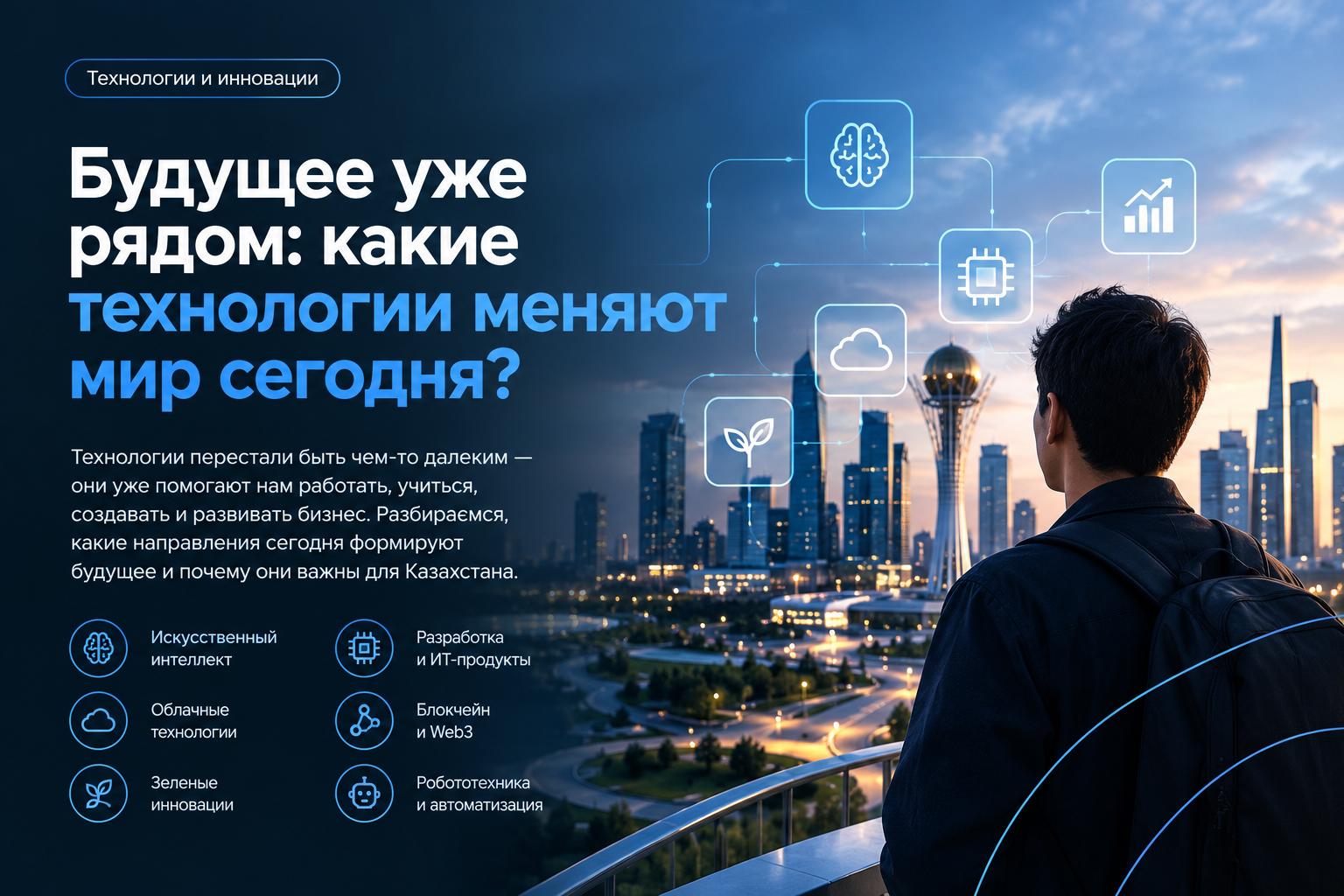
Until a few years ago, artificial intelligence, robotics, and autonomous systems seemed like technologies of the distant future. Today they are becoming a part of daily life, business and education.
Artificial intelligence-generating models help create content, analyze data, write program code, and automate routine tasks. The next stage is AI agents that can independently perform sequences of actions and work with various digital tools.
Robotics and automationbots are gradually moving beyond manufacturing enterprises. They are used in logistics, medicine, agriculture and other fields where high precision and automation of repetitive processes are required.
Cloud technologycloud infrastructure allows companies to launch digital products faster, scale computing power, and work with large amounts of data without having to create the entire infrastructure themselves.
New approaches to AI development-tools are changing the very process of creating software. Developers get the opportunity to write and test code faster, analyze errors, and create product prototypes.
Green Technologythe development of technologies is also related to the search for more efficient ways to use energy and resources, from intelligent energy systems to new solutions in the field of transport and production.
For Kazakhstan, the development of these areas means not only the introduction of ready-made technologies, but also the opportunity to create their own products, teams and solutions focused on both the domestic and international markets.
The technological future is not being shaped somewhere far away — it is already being created today.
And which technologies, in your opinion, will have the greatest impact on our lives in the coming years? 💬
#Technology #Innovation #AI #Artificial Intelligence #IT #Startups #Robotics #AstanaHub
Большие языковые модели умеют создавать тексты, генерировать идеи и находить решения для самых разных задач. Но есть интересная особенность: если несколько раз задать модели один и тот же или похожий запрос, ответы могут оказаться удивительно похожими.
Почему это происходит?
Модель стремится находить наиболее вероятные продолжения текста. Поэтому при некоторых типах задач она может отдавать предпочтение ограниченному набору вариантов — например, одним и тем же именам, формулировкам или значениям.
Для задач, где важно исследовать множество альтернатив, это становится ограничением.
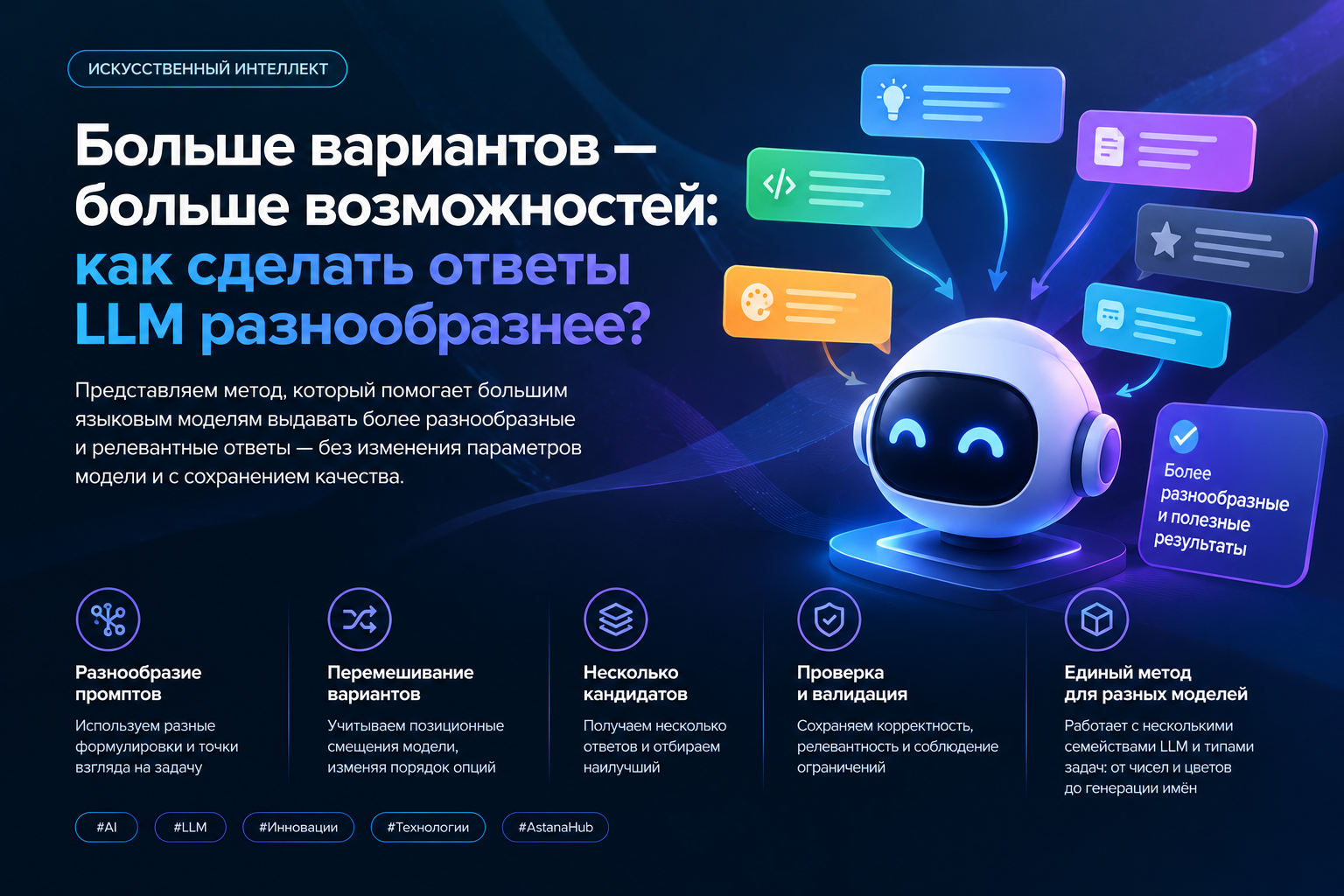
💡 Один из подходов — разнообразить сам процесс получения ответа, не изменяя базовые параметры модели.
Например, можно:
🔹 использовать несколько вариантов формулировки одного запроса;
🔹 менять порядок предложенных вариантов, чтобы снизить влияние их позиции;
🔹 получать несколько независимых кандидатов;
🔹 автоматически проверять их на соответствие исходным ограничениям;
🔹 выбирать итоговый вариант с учетом не только качества, но и разнообразия.
Такой подход позволяет рассматривать языковую модель не как источник единственного ответа, а как инструмент для исследования пространства возможных решений.
Это особенно актуально для генерации идей, названий, сценариев, синтетических данных и других задач, где пользователю важно получить не один наиболее очевидный результат, а набор действительно отличающихся друг от друга вариантов.
При этом ключевой вопрос остается прежним: как увеличить разнообразие, не потеряв качество?
Именно поиск баланса между разнообразием, корректностью, релевантностью и стоимостью генерации становится одним из интересных направлений развития современных AI-систем.
#AI #LLM #ИскусственныйИнтеллект #Инновации #Технологии #MachineLearning #IT #AstanaHub
 Share